This series breaks down the engineering behind Auracast’s reliability piece by piece, from the audio codec to the frequency-hopping strategy to the power and signal math, showing how it all comes together in a real-world spec. No hand-waving, just the mechanisms, the limits, and what you need to deploy it with confidence.
the 2.4 GHz band has a bad reputation in AV circles: unlicensed, unmanaged, and prone to failing when a room fills up. This post takes a hard look at what’s actually sharing that band with Auracast™, and finds it’s a lot less hostile than the reflex suggests. It isn’t full. It’s just crowded, and getting quieter.
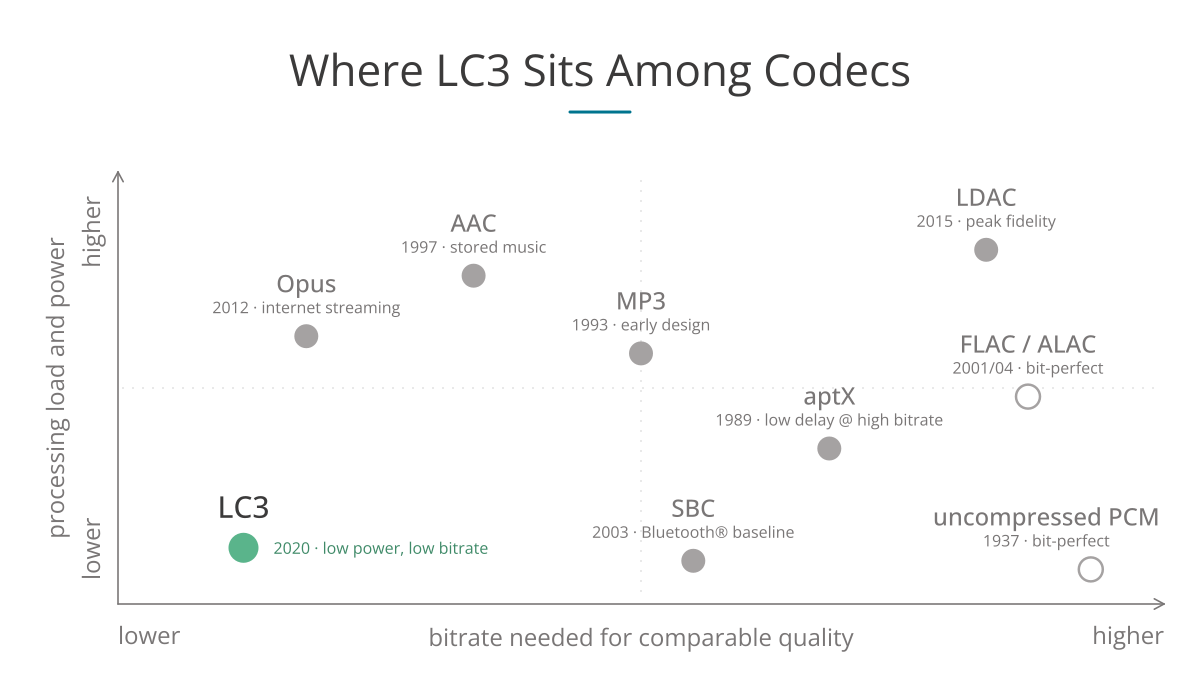
Auracast™ relies on LC3, the audio codec purpose-built for Bluetooth® LE. This post breaks down how LC3 packs quality speech into a tiny, efficient packet, and why that efficiency matters as much for battery life as it does for surviving a crowded band. It also covers how the codec handles the packets that don’t make it, keeping dropouts from sounding like dropouts.
First, select the calculator type, USA (for Americans with Disabilities Act - ADA), California (for California Building Code), or Australia (for Australia's Disability Discrimination Act 1992). Enter the seating capacity and the number of minimum assistive listening devices required and the minimum number of neck loops will automatically populate based on the calculator type selected.