English
Every year on March 3rd, the World Health Organization celebrates World Hearing Day to raise awareness about hearing loss and promote better ear and hearing care around the world. This year’s theme is: From communities to classrooms, hearing care for all children. This theme puts the spotlight on the millions of children living with hearing loss and the need for early intervention. With the right support, no child should be left behind because of a hearing problem. Here’s what to look for, why it matters, and what you can do about it.
There are several signs that point to hearing loss in infants and children. Here are some examples
Overall, if your gut tells you something is off, it’s worth getting their hearing checked.
Did you know that hearing loss is the most common congenital condition in newborns in the U.S.? Several studies show that hearing loss can significantly impact several areas of a child’s development, such as:
Kids with hearing loss can miss important sounds, which makes it harder to learn proper language pronunciation. When children can’t hear words well, they also have a more difficult time with vocabulary building and proper grammar usage.
When children can’t hear every sound in a word, it can be difficult for them to connect spoken words with written ones, affecting their ability to sound out or spell new words accurately.
Students who have hearing loss may find it difficult to understand teachers and take notes. This can cause lower test scores and additional stress. Trying so hard to listen and missing information can also cause exhaustion, reducing focus and academic performance.
It’s often difficult for kids to pick up on social cues and hold conversations when they live with hearing loss. Missing instructions can also cause frustration, making it harder for them to stay involved in group activities. These challenges cause many children to feel withdrawn and excluded.
Feeling withdrawn, excluded, or misunderstood can lower self-esteem and cause social anxiety. Strong emotions like anger and stress are also commonly felt when hearing loss makes it hard to be part of the group.
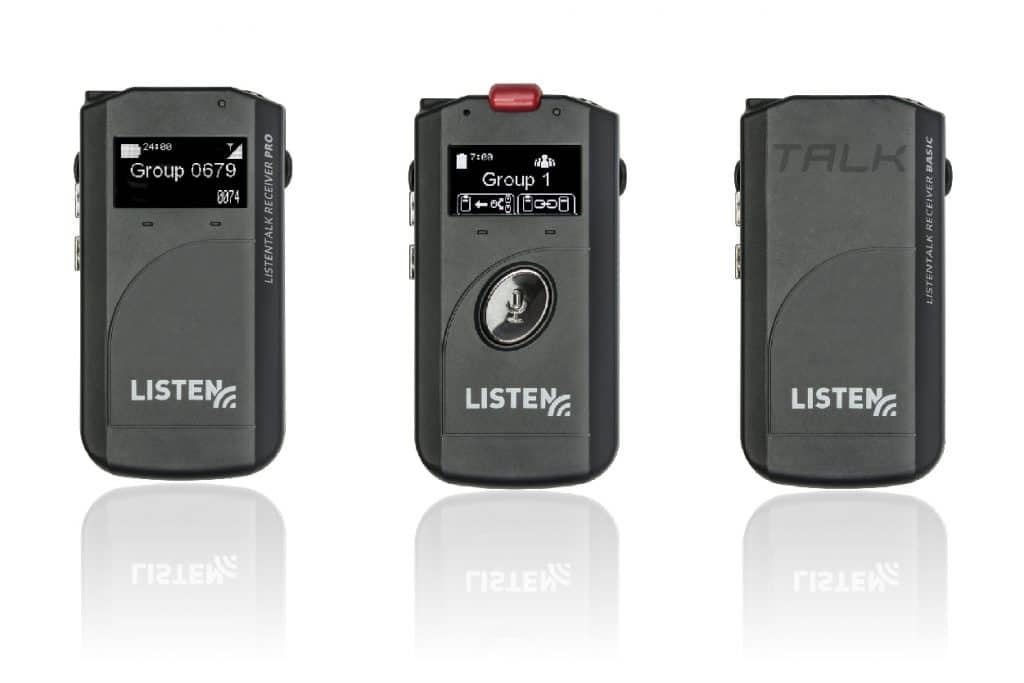
For kids with hearing loss, even the best hearing aids aren’t always enough, especially in noisy environments like classrooms. That’s where assistive listening technology comes in. Assistive listening devices bring sound directly to the listener while reducing the impact of background noise. Instead of amplifying every noise in a room, these devices focus on what matters most, like the teacher’s voice in a classroom.
What makes these devices so powerful is how easily they integrate into a child’s current routine. Students don’t need to sit in the front row or strain to hear across the room. They can hear clearly, consistently, and without the extra effort that hearing loss often requires.
Children with access to assistive listening devices in the classroom show improvements in attention, participation, and performance. They’re less tired at the end of the day because they aren’t working as hard just to keep up. And perhaps most importantly, they don’t feel left out because they can be fully present in conversations and experiences.
If you’re a parent or educator, there are things you can do to intervene early and help children with hearing loss thrive. Here are some examples.
As a parent, you should start taking your child in for regular hearing screenings at birth and continue through childhood. Many kids with mild or moderate hearing loss go too long without a diagnosis because it isn’t looked for. They learn to adapt and compensate while quietly falling behind. Ask your doctor to include a hearing screening at yearly checkups, and don’t wait for obvious signs of hearing loss. When it comes to hearing health, early detection is everything.
Schools are required to provide reasonable accommodations for students with hearing loss, but many people don’t know what that means. As a parent, you can work with teachers and administrators to create a plan that sets your child up for success, whether that’s sitting towards the front, providing written instructions, or access to special programs. Teachers can also make small but meaningful adjustments in their day-to-day, like facing the class when speaking and reducing background noise during instructions.
Assistive listening technology is more widely available than many people realize, but it’s often underused because people don’t know they can ask. If your child has hearing loss, find out whether their school has an assistive listening system and whether it’s being used. In public spaces like theaters, places of worship, and community centers, ask about available accommodations. Knowing what’s out there and advocating for access to it can make a meaningful difference in how fully a child can participate in every environment they’re in.
World Hearing Day 2026 is a reminder that hearing care for children starts with awareness, but it doesn’t stop there. From recognizing the early signs of hearing loss to advocating for the right tools and accommodations, every step taken for a better future for children makes a difference. This year’s theme calls on all of us to act now so no child is left behind. Because every kid deserves to fully hear, learn, and participate in the world around them.
We would love to deliver valuable insights right to your inbox once a month.

We would love to answer your questions, provide you with a detailed quote, or send you more information.
First, select the calculator type, USA (for Americans with Disabilities Act - ADA), California (for California Building Code), or Australia (for Australia's Disability Discrimination Act 1992). Enter the seating capacity and the number of minimum assistive listening devices required and the minimum number of neck loops will automatically populate based on the calculator type selected.